Why Mixing Loud Is Lying to You
 Every mix decision you make is emotional.
And volume is the emotion multiplier.
Turn it up, and everything feels important.
Turn it down, and suddenly only the truth survives.
Most engineers don’t realize this:
The level you monitor at is shaping your mix more than your plugins are.
Your Ears Change With Volume
At low volumes, your ears lean into the midrange.
Vocals.
Guitars.
Snare crack.
Presence.
The midrange feels louder relative to bass and top end.
At high volumes, the low end blooms.
Bass feels bigger.
Kick feels deeper.
Everything feels heavier.
This isn’t opinion. It’s biology.
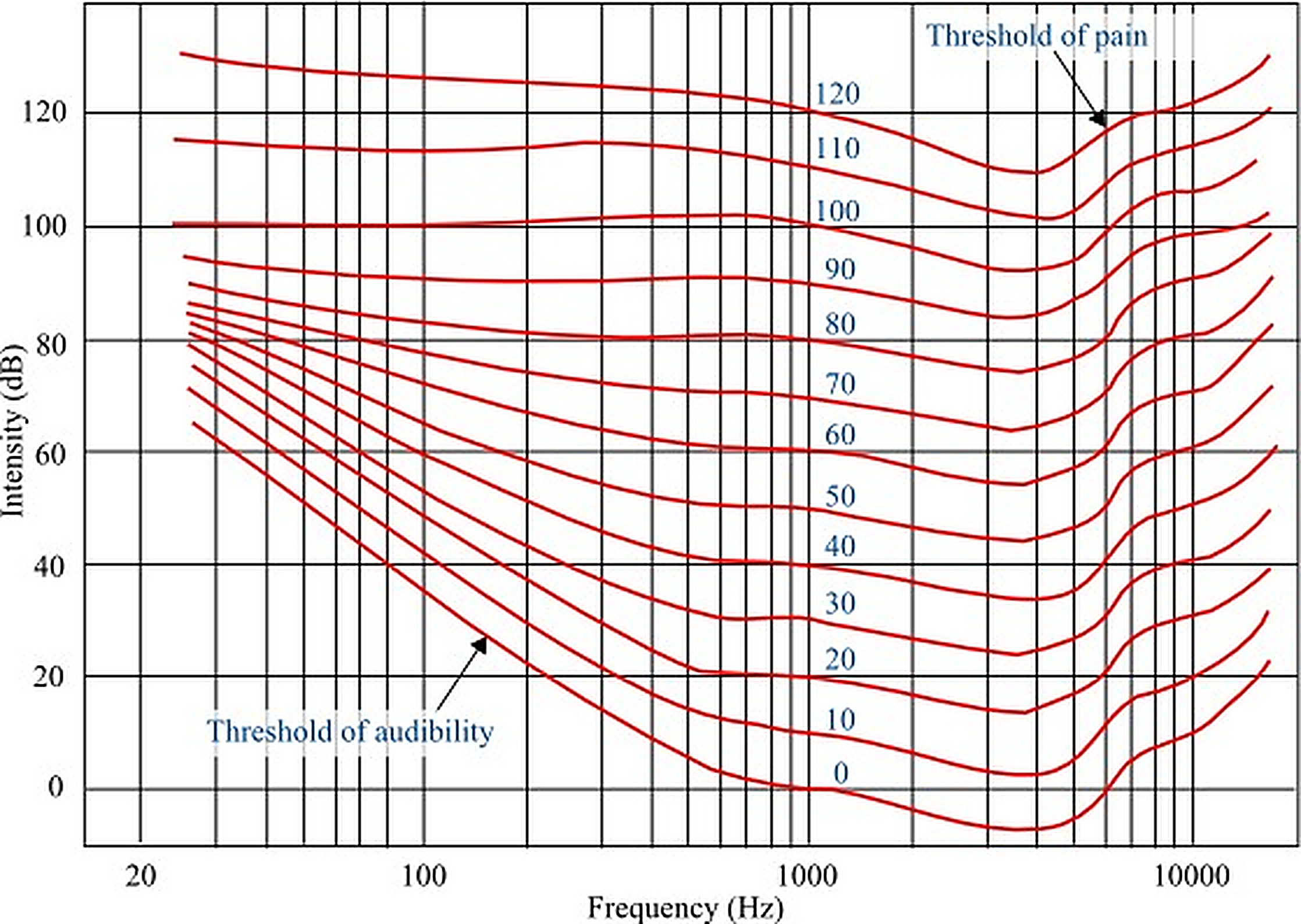
The Fletcher-Munson equal loudness curves show how our hearing shifts at different SPL levels. We do not hear all frequencies equally at all volumes. Our perception bends.
Which means…
If you mix loud, the bass feels huge.
You pull it down.
Then you play it quiet later and the mix sounds thin.
If you mix loud, the mids feel recessed.
You push vocals and guitars.
Then you play it quiet and everything feels honky and aggressive.
The problem isn’t your EQ.
It’s the monitoring level.
Loud Feels Good. Quiet Tells the Truth.
Mixing loud is addictive.
The speakers move air.
The low end hits your chest.
The song feels finished before it is.
But loud also lies.
It exaggerates impact.
It hides harshness.
It shortens your objectivity.
And it destroys your ears faster than you think.
Mixing quiet does something different.
It strips away drama.
It exposes imbalance.
It forces arrangement and level decisions to carry the weight.
When a mix feels good at low volume, it usually survives everywhere.
That’s not a rule.
It’s a pattern.
75 dB vs 85 dB — Does It Matter?
Some engineers mix around 85 dB SPL.
Others prefer 75 dB SPL.
Some even lower.
There’s no moral high ground here.
Higher levels (around 85 dB):
- Feel more exciting
- Present a flatter perceived response
- Can reveal punch and impact
But they:
- Cause faster ear fatigue
- Exaggerate room problems
- Tempt you into overworking the mix
Lower levels (around 70–75 dB):
- Reduce fatigue
- Improve balance decisions
- Reveal midrange problems
- Translate better to real-world playback
But they can:
- Under-represent sub energy
- Feel less “fun”
- Make you doubt the power of the mix
The answer isn’t picking a side.
The answer is consistency.
The Sweet Spot Isn’t a Number
Engineers love numbers.
75 dB.
83 dB.
85 dB.
But the real sweet spot isn’t a number on a meter.
It’s the level where:
- Your ears aren’t straining
- The low end isn’t overwhelming
- The midrange isn’t stabbing
- You can work for hours without tension
That’s the level where your perception stabilizes.
And stability is everything in mixing.
My Rule
Start quiet.
If it feels balanced and emotional at a controlled level,
then turn it up briefly to check energy.
Don’t live up there.
Visit.
Then come back down.
Because the audience won’t all be listening at 85 dB in a treated room.
They’ll be in cars.
On phones.
In kitchens.
At 7 a.m.
At midnight.
If it works quiet, it works.
Translation Is the Goal
The goal isn’t “loud and impressive in your studio.”
The goal is translation.
Volume is just another lens.
If you keep changing the lens, your decisions change too.
So find a working level.
Calibrate if you want.
Reference commercial tracks.
Take breaks.
But most of all —
Be aware that volume is influencing you.
Because once you understand that,
you stop chasing balance,
and you start controlling it.